Why active traders need specialized tax infrastructure
If you trade crypto like a day trader, standard tax forms are essentially useless. The IRS treats cryptocurrency as property, which means every swap, trade, or even staking event is a taxable event. For casual investors holding a few positions, calculating capital gains on a handful of transactions is manageable. For active traders executing hundreds or thousands of trades, the data volume becomes unmanageable without specialized infrastructure.
Standard capital gains reporting requires tracking the cost basis for every single coin sold. This is not just tedious; it is prone to catastrophic errors. A misplaced decimal or a missed airdrop can trigger an audit. Specialized tax software and infrastructure are not luxuries for active traders; they are compliance necessities. They ingest exchange APIs, normalize messy data, and apply complex lot-matching algorithms that spreadsheets cannot handle.
Beyond basic compliance, specialized infrastructure opens the door to advanced tax strategies. For instance, active traders may qualify for Section 475(f) mark-to-market treatment. This election fundamentally changes how gains and losses are reported, allowing traders to treat crypto as business inventory rather than capital assets. This can eliminate wash sale restrictions and allow for ordinary loss deductions, which are far more valuable than capital loss limits.
Without the right tools, you are flying blind. You need a system that not only calculates your taxes but also provides the documentation required to defend your positions if the IRS questions your filings. The difference between a compliant tax return and a costly audit often comes down to the quality of the infrastructure you built before the tax year began.
Choosing the right tax software for high-volume trading
Active trading turns tax season into a logistical nightmare. When you execute hundreds or thousands of transactions across multiple chains and exchanges, manual spreadsheet tracking is a recipe for errors. The right crypto tax software acts as your infrastructure, aggregating data and applying the correct tax rules before you file.
For high-frequency traders, the volume of data is the primary constraint. You need a platform that can ingest large CSV exports or connect via API without timing out. Look for providers that offer unlimited transaction history and support for all major exchanges, including decentralized protocols. If your software struggles with 10,000+ transactions, it will fail you during April.
Integration breadth matters just as much as processing speed. The best tools connect directly to Coinbase, Binance, Kraken, and leading DeFi wallets like MetaMask. This eliminates the need to manually upload dozens of CSV files. Some platforms also support advanced features like wash sale tracking for crypto-ETFs or specific cost-basis methods (FIFO, LIFO, Specific ID) required by your broker.
Here is how the top contenders compare on the features that actually impact active traders:
| Feature | Koinly | CoinTracker | TokenMetrics | BlockPit |
|---|---|---|---|---|
| Max Transactions (Free Tier) | 25 | 25 | N/A | 100 |
| API Connection Support | Yes | Yes | Limited | Yes |
| DeFi & NFT Tracking | Strong | Strong | Basic | Strong |
| Wash Sale Tracking | No | No | Yes | No |
| Tax Report Types | IRS, HMRC | IRS, HMRC | IRS | IRS, HMRC |
The choice often comes down to your specific trading style. If you trade heavily on DeFi protocols, Koinly or BlockPit offer superior blockchain parsing. If you stick to centralized exchanges and want a clean interface, CoinTracker is reliable. For those who also trade traditional assets alongside crypto, TokenMetrics provides unified reporting that handles wash sales—a common pitfall for active traders.

Regardless of the tool, always verify your data. Software can misclassify certain transactions, especially those involving staking rewards or airdrops. Cross-check your final report against your exchange statements before filing. For official guidance on how these transactions are treated, refer to resources like the Fidelity crypto tax guide or Schwab's cryptocurrency tax overview.
Essential tools for tracking and reconciliation
Active trading generates data that no human can track manually. You need a technical infrastructure that captures every trade, swap, and transfer before the tax season arrives. This isn't just about convenience; it's about accuracy. If your data is incomplete, your tax calculation will be wrong, and the IRS does not accept "I lost my records" as a valid defense.
The foundation of this infrastructure is your exchange API. You need to generate read-only API keys for every exchange and decentralized wallet you use. Read-only access is critical because it allows your tracking software to pull transaction history without giving anyone the ability to move your funds. This ensures data integrity while keeping your assets secure. Most major exchanges provide clear documentation on how to set this up, so refer to their official support pages for specific steps.
Once your APIs are connected, you must verify the data. Automated tools can miss certain transactions, especially those involving decentralized finance (DeFi) protocols or cross-chain bridges. You should periodically export your trade logs directly from the exchanges and compare them against your portfolio tracker. This reconciliation step catches gaps in your history, ensuring that every taxable event is accounted for.

Checklist for setting up tax data collection
- Enable API read-only access on all exchanges and wallets.
- Download historical trade logs from each platform as a backup.
- Verify DeFi transaction history through block explorers or specialized trackers.
Strategic tax planning for the 2026 tax year
Active traders face a unique challenge: the IRS treats crypto as property, meaning every swap, trade, or transfer is a taxable event. For high-volume traders, this can quickly erode capital if you aren't actively managing your liability. Strategic tax planning isn't about hiding income; it's about using the tax code's existing mechanisms to preserve your trading capital for future opportunities.
Tax-loss harvesting
Tax-loss harvesting is the most direct way to offset gains. If you have a losing position, you can sell it to realize a loss, which then offsets any capital gains you've realized elsewhere in the year. If your losses exceed your gains, you can deduct up to $3,000 against ordinary income, with the remainder carried forward to future years.
For active traders, timing is everything. You need to monitor your unrealized losses daily and execute sales strategically to balance out gains from winning trades. This requires a disciplined approach to record-keeping and real-time tracking of your portfolio's performance.
Retirement accounts for crypto
Using a self-directed IRA or 401(k) to hold crypto can shield your trading profits from immediate taxation. Gains within these accounts grow tax-deferred (Traditional) or tax-free (Roth), allowing compounding to work without the drag of annual tax events.
However, this strategy requires caution. You must avoid prohibited transactions, such as buying crypto from a disqualified person or using it as collateral for a loan, which can disqualify the entire account. Additionally, self-directed accounts often come with higher fees and complex paperwork. It's a tool for long-term accumulation, not necessarily for high-frequency day trading, where transaction costs can eat into your edge.
Understanding wash sale exemptions
Here's the good news: the IRS wash sale rule, which disallows losses if you buy a "substantially identical" security within 30 days, currently does not apply to cryptocurrencies. This was a significant clarification that gave traders more flexibility.
This means you can sell a crypto asset at a loss to harvest that tax benefit and immediately buy it back without losing your cost basis. This allows you to maintain your market exposure while still realizing the tax loss. However, this rule is subject to change, and the IRS has signaled future intent to extend these rules to digital assets. Stay informed and plan accordingly.
Common pitfalls in crypto tax reporting
High-frequency trading amplifies the risk of reporting errors. Even small oversights compound quickly when you are executing dozens of trades daily. The IRS treats cryptocurrency as property, meaning every swap, stake, and fork triggers a taxable event. Missing these details is the fastest route to an audit.
Ignoring DeFi staking rewards
Many traders view staking rewards as passive income that flies under the radar. It does not. The IRS considers staking rewards as ordinary income at the fair market value when you receive them. If you are running multiple validators or using liquid staking derivatives, tracking these micro-transactions manually is nearly impossible. Use dedicated tax software that integrates directly with your wallet or exchange API to capture these events automatically.
Misclassifying hard forks
Hard forks can be confusing because the technical outcome varies. In some cases, you receive new tokens for free; in others, you get nothing. The tax treatment depends entirely on whether you exercised control over the new assets. If you could sell or trade the forked tokens immediately, they are taxable income. If you received nothing, there is no tax event. Misclassifying a fork as a non-event is a common error that leaves money on the table or creates an unreported liability.
Failing to report airdrops
Airdrops are often dismissed as free money, but the IRS disagrees. You must report the fair market value of airdropped tokens as income on the date you received them. This applies to both major protocol airdrops and smaller, niche distributions. Active traders often miss these because they happen outside their primary trading pairs. Ensure your tax tool is scanning for all incoming token transfers, not just the ones you actively trade.
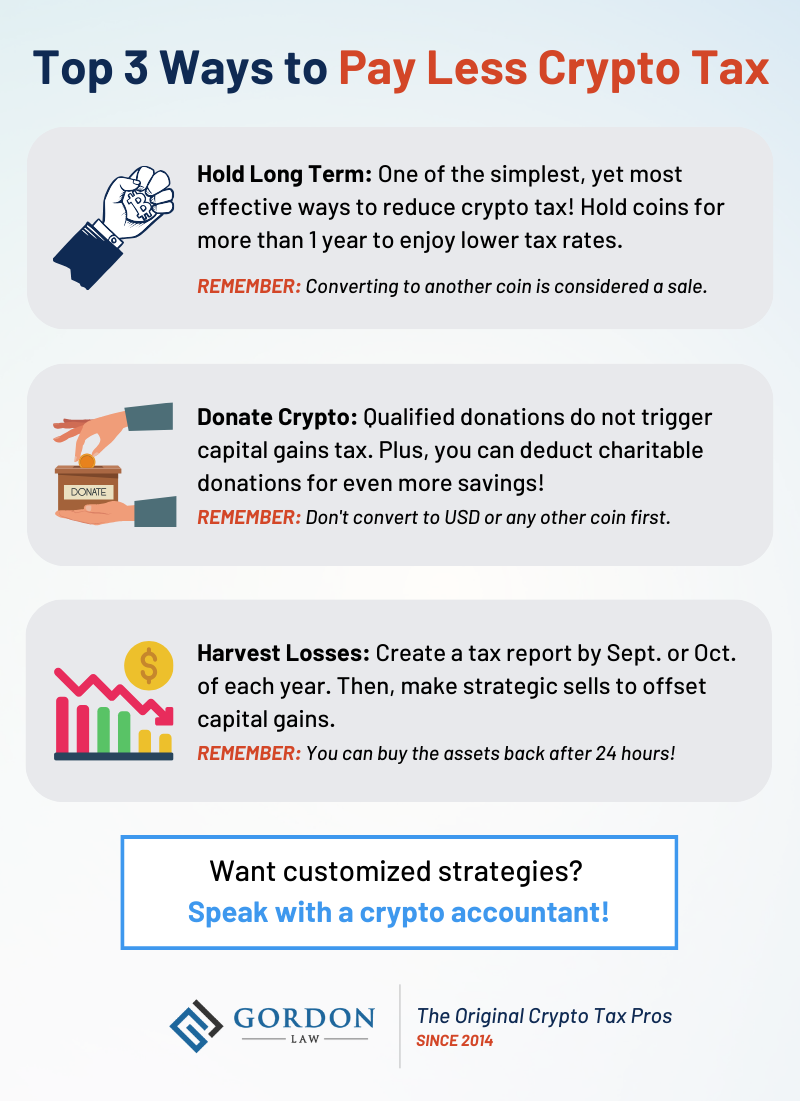
For detailed guidance on how these events are treated, refer to the official Fidelity crypto tax guide. Always consult a tax professional for your specific situation, as rules can change.
Frequently asked questions about crypto taxes
Active traders face unique tax complexities that standard investor guides often miss. Here are the most common questions regarding crypto tax education, tools, and infrastructure for high-volume trading.
Helpful gear
Use these product recommendations as a starting point, then choose the size, material, and price point that fit how you actually use the gear.



As an Amazon Associate, we may earn from qualifying purchases.
No comments yet. Be the first to share your thoughts!