Why active traders need a new tax framework
Crypto tax education for active traders isn't just about filling out forms; it's about survival. If you are executing dozens of trades daily, the standard passive investor rules will likely bankrupt you before the IRS does. The tax code distinguishes sharply between someone who buys and holds assets and someone who runs a business. For high-frequency traders, your activity is a business, not a hobby.
The Internal Revenue Service (IRS) defines a trader in securities based on the frequency, extent, and continuity of your transactions. If you seek to profit solely from daily market movements rather than long-term appreciation, you may qualify for trader tax status. This distinction matters because it allows you to deduct business expenses and use mark-to-market accounting, which prevents the wash-sale rule from applying to your crypto losses.
Relying on generic tax software designed for occasional sellers is dangerous. You need a framework that tracks every swap, airdrop, and staking reward in real time. The new Form 1099-DA, which aggregates broker-reportable transactions, will make your trade history visible to the IRS. Without precise records and specialized education, you risk misclassifying business losses as capital losses, leading to massive overpayments or audit triggers.
The volatility of the market doesn't change the tax liability. Whether Bitcoin is surging or crashing, every trade is a taxable event unless you have the right structure in place. Active traders must treat their tax compliance with the same rigor as their risk management. Ignoring the complexity of crypto taxation is a costly mistake that no amount of trading profit can easily fix.
Trader status vs. investor status
For most people trading crypto, the IRS treats every sale as a capital gain or loss, reported on Schedule D. This is the "investor" path. It is straightforward, but it has a hard limit: you can only deduct capital losses against capital gains, plus a small amount of ordinary income.
Active traders face a different reality. If your trading is frequent, substantial, and continuous, you may qualify as a "Trader in Securities" (TIS). The IRS does not have a specific form for "crypto traders," but it does have rules for traders in securities. Since crypto is often treated as property, the distinction becomes critical for how you report income and losses.
Qualifying as a TIS allows you to report trading activity on Schedule C instead of Schedule D. This changes your tax life. You can deduct ordinary business expenses, including software, data feeds, and home office costs. More importantly, you can offset ordinary income with trading losses without the $3,000 capital loss cap.
The bar is high. The IRS looks for three main factors: frequency of trades, holding periods (short-term), and intent to profit from daily market movements rather than long-term appreciation. You cannot just claim this status because you trade a lot. You must demonstrate that trading is your business.
If you do not meet the strict criteria, you remain a speculator/investor. Misclassifying yourself can lead to audits and penalties. Use the live chart below to see the volatility that often drives high-frequency strategies, but remember: the market moves fast, but tax rules move slower.
The choice between Schedule C and Schedule D is not just about paperwork. It is about whether your trading is a hobby or a profession. For high-volume traders, the difference can mean tens of thousands of dollars in additional deductions.
Consult a tax professional who understands both crypto and the TIS rules. The IRS publication on traders in securities provides the official framework, but applying it to crypto requires specific expertise IRS Topic 429.
Key taxable events for high-frequency trading
Active traders don’t just buy and sell; they swap, stake, and interact with decentralized protocols. Each of these actions can trigger a taxable event under IRS rules. Understanding these triggers is critical for your Crypto Tax Education for Active Traders guide, especially when dealing with high volume.
Swaps and Token Exchanges
Swapping one cryptocurrency for another is a taxable disposal. The IRS treats this like selling an asset for cash. You must calculate the fair market value of the token you sold at the exact moment of the swap. This applies to decentralized exchange (DEX) swaps just as much as centralized platform trades. Keeping track of these micro-transactions is essential for accurate reporting.
Staking Rewards and Yield
Receiving staking rewards is generally considered ordinary income at the time of receipt. The value is based on the fair market price when the reward is added to your wallet. If you later sell those rewards, any change in value from that point forward is a capital gain or loss. This dual-layer tax treatment can complicate your portfolio tracking significantly.
DeFi Interactions
Interacting with DeFi protocols often creates taxable events. Providing liquidity to a pool, borrowing against collateral, or bridging assets between chains can trigger disposals. Each transaction needs to be recorded with its specific timestamp and value. The complexity here is high, and errors can lead to significant discrepancies in your final tax return.
The volume of records required for this level of trading is immense. A single day of active trading can generate hundreds of transactions. Without automated tracking tools, reconciling these events manually is nearly impossible. Accurate record-keeping is not just a best practice; it is a compliance necessity for high-frequency traders.
Essential tools for tracking and reporting
Manual spreadsheets collapse under the weight of high-frequency trading. When you execute dozens of trades across multiple chains and exchanges in a single day, the error margin in a spreadsheet becomes a compliance liability. You need infrastructure that ingests raw API data and reconciles it against tax codes automatically.
The modern solution is specialized crypto tax software. These platforms connect directly to your exchange accounts via API, pulling every deposit, withdrawal, and trade. They calculate cost basis using methods like FIFO or LIFO and flag suspicious transactions before you file. This automation is the difference between a smooth audit defense and a chaotic scramble for receipts.
Choosing the right tool depends on your volume and complexity. The table below compares how leading platforms handle the specific pain points of active traders.
| Feature | Coinbase Tax | Koinly | TokenView |
|---|---|---|---|
| Supported Exchanges | 100+ | 300+ | 150+ |
| API Sync | Yes | Yes | Yes |
| Cost Basis Methods | FIFO, LIFO, Specific ID | FIFO, LIFO, Specific ID | FIFO, LIFO, Specific ID |
| Audit Support | Basic | Strong | Strong |
For active traders, the volume of data is the primary constraint. Look for software that offers unlimited transaction syncing and supports complex DeFi interactions, such as liquidity pool deposits and staking rewards. The IRS has increased scrutiny on unreported crypto gains, so ensuring your software generates a complete Form 8949 is non-negotiable.
Strategies to minimize tax liability legally
Active trading generates high volume, which often translates to high tax bills if not managed correctly. You can reduce what you owe to the IRS by treating your tax strategy with the same discipline as your trading strategy. The goal isn't to hide income, but to legally offset gains with losses and keep your records airtight.
Tax-loss harvesting involves selling assets that have dropped in value to offset capital gains. For active traders, this is a primary tool. If you have a $10,000 gain in Bitcoin, selling a losing altcoin position can cancel that out. However, you must be careful with the "wash sale" rule. While the IRS has been slow to explicitly codify crypto wash sales, many tax professionals advise treating them as if they apply to avoid future penalties. Wait at least 31 days before repurchasing the same asset.
The IRS treats cryptocurrency as property, meaning every swap, trade, or transfer is a taxable event. Manual tracking is impossible for high-frequency traders. Use reputable crypto tax software that connects to your exchanges via API. These tools generate Form 8949 automatically, ensuring you report every trade accurately. Fidelity notes that keeping detailed records of your cost basis is essential for proving your figures during an audit.
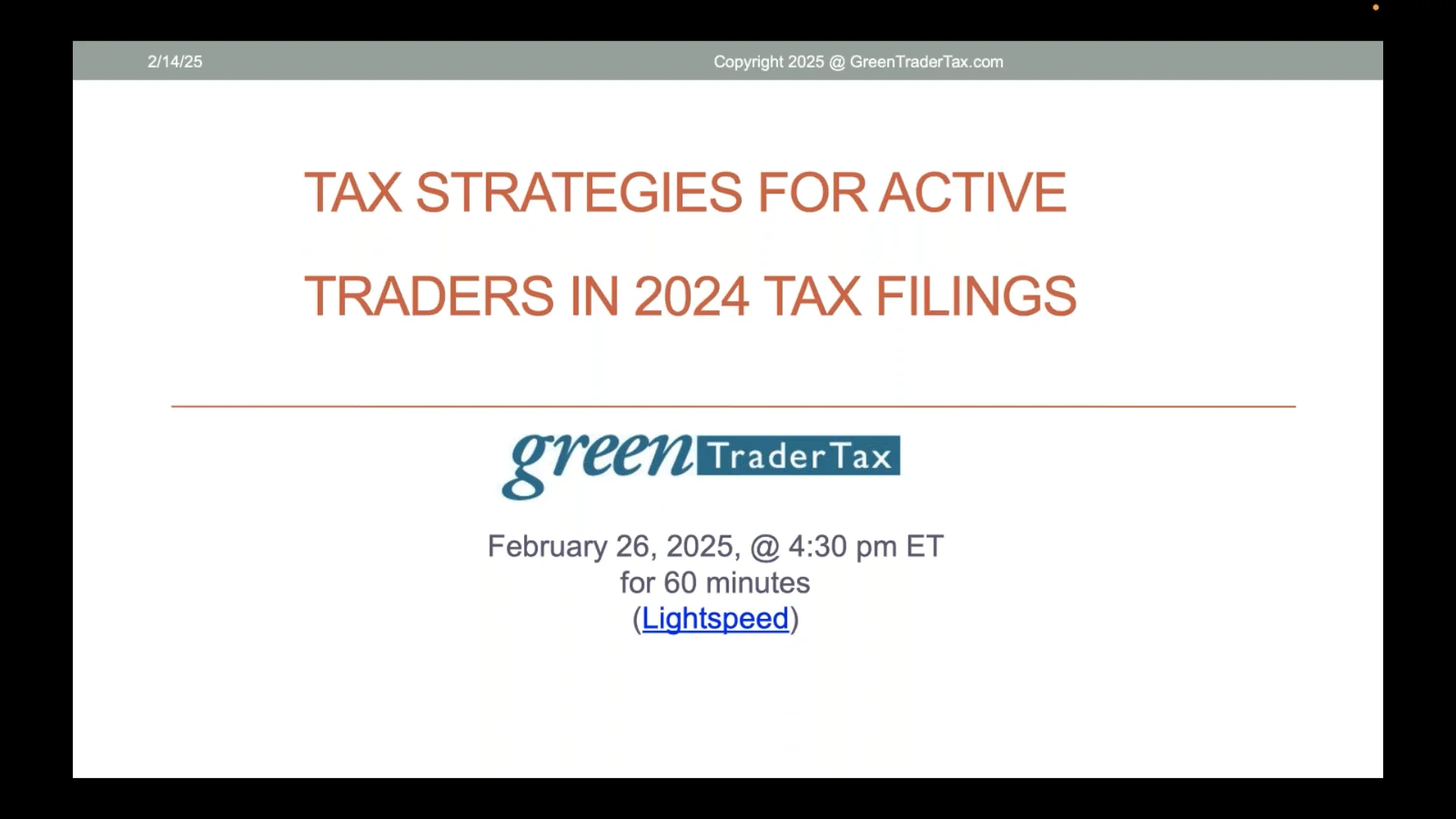
If you trade frequently, standard capital gains rules can be cumbersome. Section 475(f) of the Internal Revenue Code allows eligible traders to elect mark-to-market (MTM) accounting. This method treats all securities as sold at the end of the tax year, converting what would be capital gains into ordinary income. The trade-off is that you lose the favorable long-term capital gains rates, but you gain the ability to deduct ordinary business losses against other income, which can be significant in volatile years.
| Feature | Standard Trader | Mark-to-Market Trader |
|---|---|---|
Proper record-keeping is your best defense. When you can clearly show that a loss was part of a legitimate trading strategy rather than a speculative gamble, you protect yourself. Use the tools available to you, stay consistent, and consult a tax professional who specializes in crypto to ensure you are maximizing your deductions legally.
Frequently asked questions about crypto taxes
Active traders face unique complexities when navigating the intersection of high-frequency trading and IRS regulations. Understanding how specific transactions are classified can mean the difference between a manageable tax bill and an unexpected audit. Below are answers to the most common questions from high-intent search queries.
For the most current guidance on reporting requirements, always refer to IRS Publication 590-B or consult a tax professional specializing in digital assets.
No comments yet. Be the first to share your thoughts!