Why infrastructure matters for active traders
For high-frequency traders, the gap between a winning strategy and a losing tax bill is often just data. You might have the sharpest technical analysis and the fastest execution, but if your tax infrastructure is built on spreadsheets and memory, you are leaving money on the table—and inviting audit risk.
Manual tracking simply cannot keep pace with the volume of active trading. A single day of day trading can generate hundreds of transactions. Trying to reconcile these manually is not just tedious; it is statistically likely to produce errors. These errors compound over time, turning what should be a straightforward capital gains calculation into a compliance nightmare.
Note: Active traders face higher compliance risks due to volume. Manual tracking is prone to error; automated infrastructure is a necessity, not a luxury.
The right software acts as your financial back office. It ingests exchange data, calculates cost basis using the most favorable method for your strategy, and flags wash sales before they happen. This isn't about convenience; it is about accuracy. In the world of crypto, where every trade is a taxable event, your infrastructure determines whether you pay the right amount of tax or overpay due to poor record-keeping.
Consider the difference between a trader who tracks their own basis and one who uses specialized tools. The former might use FIFO (First-In, First-Out) by default, potentially locking in higher gains. The latter can optimize for specific lot selections or use methods like HIFO (Highest-In, First-Out) to minimize taxable income, provided their software supports it and they stay compliant with IRS guidelines.
This is where the choice of tool becomes a strategic decision. Just as you wouldn't trade a high-frequency strategy on a slow broker, you shouldn't manage a high-volume portfolio with basic tax software. The infrastructure must handle the load, provide real-time visibility into your tax liability, and generate the reports your accountant needs to file accurately. Without this, you are trading blind.
Comparing tax software for high-volume trading
Choosing the right crypto tax software is less about picking the cheapest option and more about ensuring your infrastructure can handle the volume. Active traders generate thousands of transactions, often across multiple exchanges and DeFi protocols. If your tax tool throttles API calls or fails to reconcile historical data, you risk filing errors that trigger audits.
The primary differentiators for high-volume traders are API limits, supported exchanges, and real-time syncing capabilities. Most standard tools cap free tiers at a few hundred transactions, forcing heavy traders into paid plans. These plans vary widely in price and feature depth. Some focus on simple reporting, while others offer advanced portfolio tracking and real-time sync to catch missed transactions before tax season.
Below is a direct comparison of leading tools based on their current feature sets for active traders.

| Tool | API Limit (Free/Paid) | Supported Exchanges | Real-Time Sync | Price Model |
|---|---|---|---|---|
| CoinTracker | 100 / Unlimited | 150+ | Yes (Paid) | Free tier / $49+ |
| CoinLedger | 250 / Unlimited | 100+ | Yes (Paid) | Free tier / $49+ |
| Koinly | 100 / Unlimited | 200+ | Yes (Paid) | Free tier / $49+ |
| TokenTax | 100 / Unlimited | 100+ | Yes (Paid) | Free tier / $79+ |
| CryptoTrader.Tax | 50 / Unlimited | 100+ | Yes (Paid) | Free tier / $49+ |
API limits are the first bottleneck you will hit. Most tools allow a limited number of API imports on free plans. If you trade frequently, you will quickly exceed these limits. Paid plans remove these caps but often introduce other restrictions, such as the number of supported exchanges or the depth of historical data available.
Real-time syncing is critical for active traders. It ensures that every trade, staking reward, and airdrop is captured as it happens. Without it, you may miss transactions until the end of the year, leading to incomplete filings. Most paid plans offer this feature, but the frequency of syncs varies. Some tools sync daily, while others may take longer to process large volumes of data.
Supported exchanges and wallets also matter. If you trade on niche DeFi protocols or smaller exchanges, ensure your chosen tool supports them. Most major tools support the top 100 exchanges, but coverage of smaller platforms can be spotty. Always check the supported list before committing to a plan.
Strategies to reduce capital gains liability
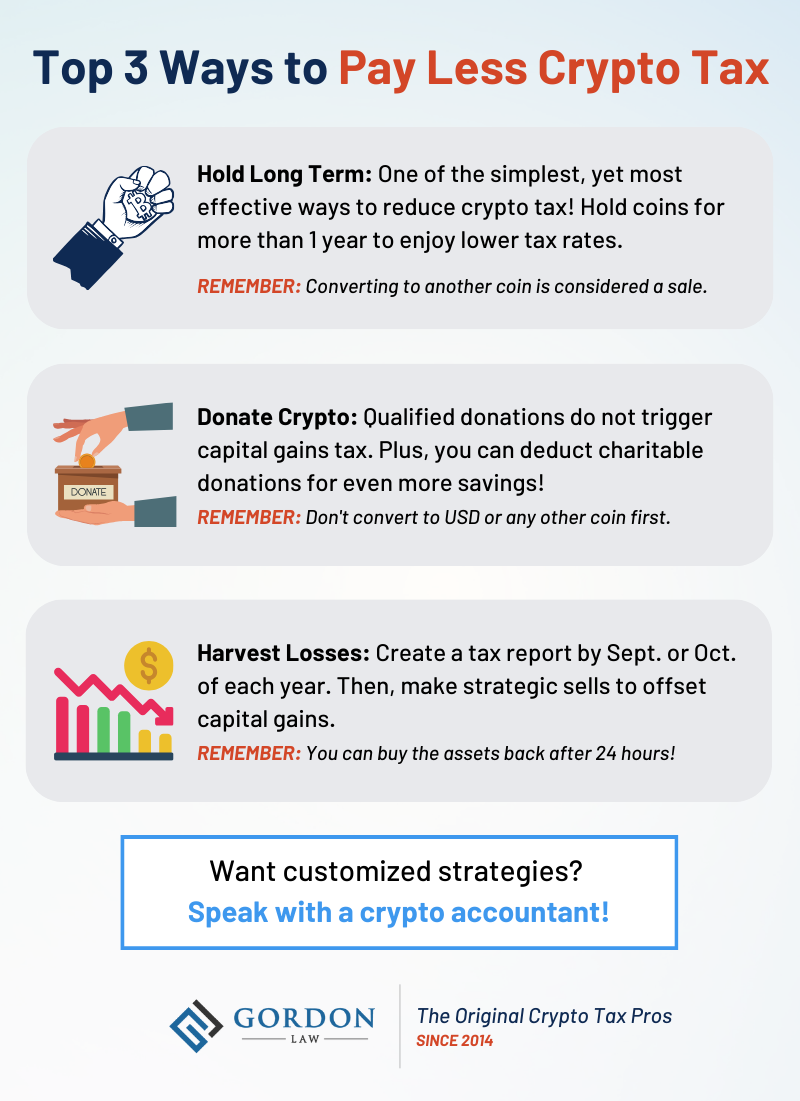
Active traders face a higher tax burden than buy-and-hold investors because short-term gains are taxed as ordinary income, which can reach 37% in the US. However, the IRS code offers specific mechanisms to offset these gains. The most immediate tool is tax-loss harvesting, but for professional traders, electing Trader Tax Status (TTS) or using Section 475(f) mark-to-market accounting can fundamentally change how profits are calculated and taxed.
Harvesting losses to offset gains
Tax-loss harvesting involves selling assets that have declined in value to realize a loss, which can then be used to offset capital gains. If your losses exceed your gains, you can deduct up to $3,000 of the remaining loss against your ordinary income each year.
For crypto traders, the wash sale rule is the primary obstacle. Currently, the IRS does not explicitly apply the wash sale rule to cryptocurrencies, meaning you can theoretically sell a crypto asset at a loss and buy it back immediately. However, this area is legally ambiguous, and future legislation could change this. Always consult a tax professional before executing rapid buy-sell cycles to avoid unexpected audits.
Holding periods and long-term gains
If you are not an active day trader, holding your crypto for more than one year qualifies you for long-term capital gains rates, which are significantly lower (0%, 15%, or 20% depending on your income). This strategy requires patience and a shift from frequent trading to swing or position trading.
The trade-off is opportunity cost. By holding, you miss out on the compounding gains from frequent trades. For most active traders, this strategy is only viable for a small portion of their portfolio designated as long-term holdings.
Trader Tax Status and Mark-to-Market
For those who trade frequently, the standard capital gains rules can be punitive. Section 475(f) of the IRS code allows qualified traders to elect mark-to-market (MTM) accounting. This election treats all securities as if they were sold on the last day of the tax year at fair market value.
The benefits are substantial:
- Ordinary loss treatment: MTM allows you to deduct trading losses as ordinary business losses, which can offset other income without the $3,000 annual cap that applies to capital losses.
- No wash sales: The wash sale rule does not apply to MTM traders, simplifying tax reporting for high-frequency strategies.
- No capital gains limits: Profits are treated as ordinary income, but the ability to deduct losses fully often results in a lower overall tax bill for active traders.
Electing MTM is complex and requires filing Form 3115 by April 15th of the current tax year. It is not a decision to make lightly, as it generally prohibits the use of long-term capital gains rates.
Checklist: End-of-Year Tax Actions
-
Review all trades for potential tax-loss harvesting opportunities.
-
Verify if any sales trigger wash sale rules (if applicable in future legislation).
-
Calculate total short-term vs. long-term gains for accurate bracket estimation.
-
Consult a CPA regarding Section 475(f) mark-to-market election if trading volume is high.
-
Gather all exchange statements and CSV exports for accurate reporting.
Choosing the right tools for your workflow
Active trading generates data at a velocity that manual spreadsheets simply cannot handle. If you are executing dozens of trades daily across multiple exchanges, your tax strategy begins with infrastructure. The wrong tool doesn't just cost you time; it introduces calculation errors that can trigger audits or result in overpaying taxes on gains you didn't realize you had.
Start by mapping your data ingestion needs. Do you use one centralized exchange or trade across five different platforms? Your software must support direct API imports or CSV parsing for every venue you use. Look for tools that automatically reconcile trades and flag suspicious transactions before you file. Accuracy here is non-negotiable because the IRS expects precise cost basis reporting.
Your technical comfort level should also dictate your choice. If you are comfortable with command-line interfaces, open-source solutions like Koinly or CoinTracker offer robust APIs and deeper customization. If you prefer a guided interface, premium platforms like CoinLedger or TokenTax provide better support for complex DeFi interactions and staking rewards. The goal is to reduce friction between your trading activity and your tax reporting.
To stay aware of market conditions that might influence your tax planning decisions, such as volatility spikes or major regulatory shifts, monitor live market data:
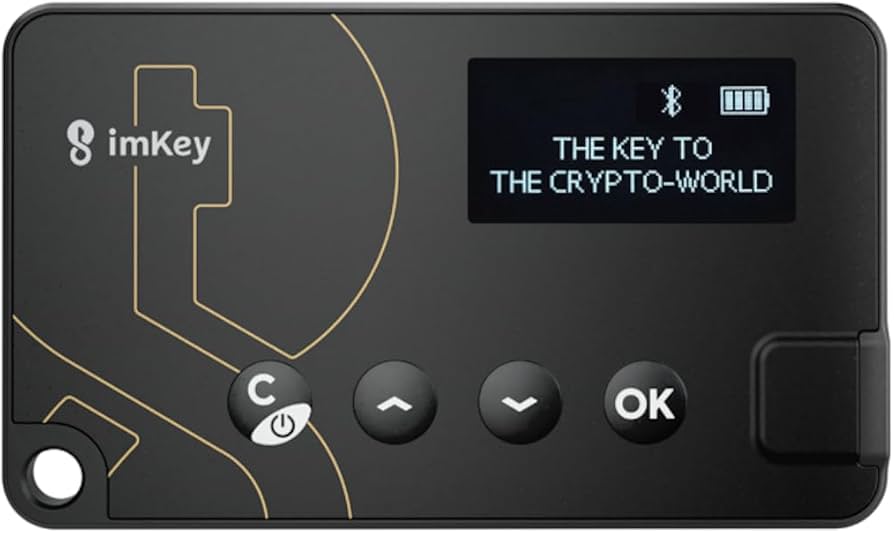
For those looking to deepen their understanding of crypto tax compliance or secure their assets while they navigate these complexities, consider these resources:
As an Amazon Associate, we may earn from qualifying purchases.
How Volatility Shapes Your Tax Bill
Market swings don't just affect your portfolio value; they directly dictate your tax liability. When Bitcoin moves rapidly, the timing of your trades determines whether you lock in short-term gains taxed at ordinary income rates or qualify for lower long-term capital gains. This volatility makes precise cost basis tracking essential for active traders.
Using live market data helps you identify optimal windows to realize losses or defer gains. Without accurate, real-time price feeds, your tax calculations may be off by significant margins during high-volatility periods. Tools that sync with exchange APIs ensure your records reflect the actual market conditions at the moment of each transaction.
No comments yet. Be the first to share your thoughts!