Why active traders need specialized tax infrastructure
Standard retail tax software is a liability for active traders. Built for buy-and-hold investors, these tools fail to process the volume, complexity, and speed of high-frequency crypto trading. When managing dozens of positions across multiple exchanges, the difference between manageable compliance and an audit nightmare comes down to infrastructure.
The core problem is data volume and API limitations. High-frequency traders generate thousands of transactions that retail software often imports incorrectly or processes too slowly. This leads to mismatched cost basis calculations, missed wash sale equivalents, and incorrect holding period classifications. According to TradeLog, understanding what counts as a taxable event becomes critical when volume spikes, as the margin for error shrinks significantly with every additional trade.
Specialized tools ingest raw API data, reconcile discrepancies across wallets and exchanges, and flag potential issues before filing. Without this automation, you are manually performing forensic accounting. The IRS treats crypto held for one year or less as ordinary income, meaning short-term gains are taxed at your highest bracket. For active traders, small errors in tracking these short-term transactions can result in significant overpayments or audits.
Choosing the right infrastructure is about accuracy and risk management. Active traders need systems that handle real-time data ingestion, complex transaction types, and high-volume reconciliation. This allows you to focus on trading strategy rather than worrying about data completeness.
Tracking tools for high-volume transaction history
When executing dozens of trades daily, spreadsheets become a liability. The sheer volume of data from centralized exchanges, decentralized protocols, and bridge transactions creates a reconciliation nightmare that manual entry cannot survive. You need infrastructure that ingests raw API data and normalizes it into a coherent ledger before filing.
The first layer is specialized crypto tax software. Platforms like Koinly, CoinTracker, and TokenTax connect directly to exchange APIs. They pull transaction histories in real-time, identifying taxable events such as swaps, staking rewards, and airdrops. For high-frequency traders, the critical feature is speed and accuracy in handling complex DeFi interactions. Generic tools often fail to parse smart contract interactions correctly, leading to underreported gains or lost cost-basis data.
| Feature | Koinly | CoinTracker | TokenTax |
|---|---|---|---|
| API Limit | Unlimited | Unlimited | Unlimited |
| DeFi Support | High | High | High |
| Real-time Sync | Yes | Yes | Yes |
However, software alone is not enough. You must consider your tax classification. If you qualify as a trader under IRS Section 475(f), you may elect mark-to-market accounting. This strategy treats crypto holdings as business inventory, allowing you to deduct losses against ordinary income and bypass wash sale rule restrictions that apply to investors.
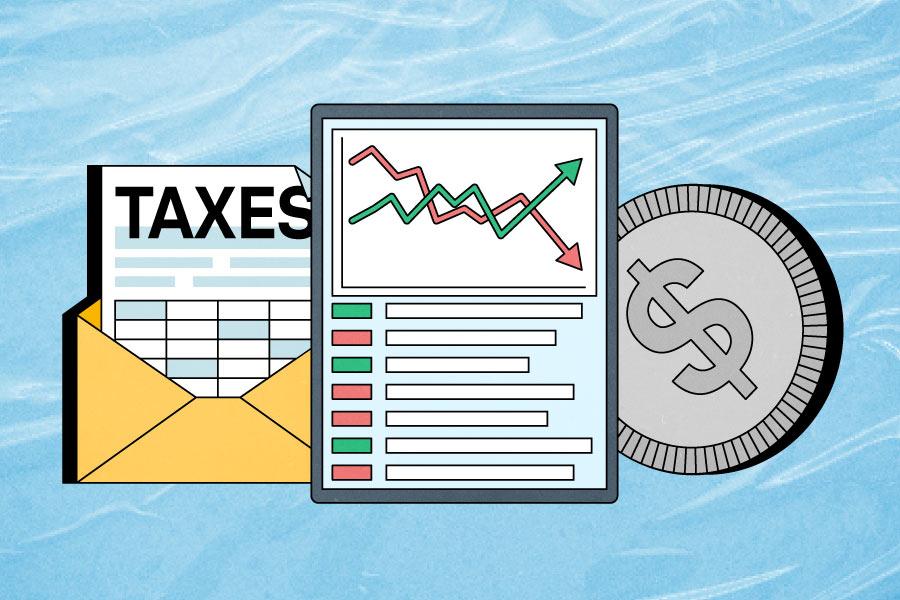
This election requires meticulous record-keeping beyond standard tax software. Many active traders use professional portfolio trackers like TradeLog or Trademetria to maintain the granular trade logs required for Form 4797. These tools offer advanced features like FIFO (First-In, First-Out) or Specific Identification methods, essential for minimizing tax liability when trading large volumes. Without this specialized tracking, you risk misclassifying capital gains, potentially triggering higher tax rates and audit risks.
The goal is to build a system where data flows automatically from trading terminals to your tax preparer. This reduces human error and ensures every trade, no matter how small or complex, is captured accurately. In high-volume trading, your tax strategy is only as strong as your tracking infrastructure.
Tax-loss harvesting for high-frequency crypto traders
Tax-loss harvesting is the most effective way to manage the tax burden of active trading. When you sell a crypto asset at a loss, you can use that loss to offset capital gains from other trades. For high-frequency traders, this strategy is essential because it directly reduces the tax liability generated by frequent short-term transactions. Without it, profits can be significantly eroded by taxes before you even realize your return.
The IRS treats most crypto-to-crypto trades as taxable events. This means every swap, even if you do not cash out to fiat, triggers a capital gain or loss calculation. If you hold an asset for one year or less, gains are taxed at ordinary income rates, which are typically higher than long-term capital gains rates. Tax-loss harvesting allows you to neutralize these short-term gains, effectively lowering your effective tax rate on active trading profits. You can also use up to $3,000 of excess losses to offset ordinary income each year, with any remaining losses carried forward to future tax years.
For active traders, the infrastructure required to execute tax-loss harvesting efficiently is complex. You need tools that provide API access to trade history and can calculate cost basis accurately across multiple exchanges. Manual tracking is prone to errors and can lead to underreporting or overreporting, both of which carry risks. Using specialized tax software that integrates directly with your trading platforms ensures that every trade is accounted for and that loss harvesting opportunities are identified in real time.
The timing of your trades matters. You should monitor your portfolio for assets that have declined in value, especially if you hold other positions that have appreciated. Selling the losing position locks in the loss, which you can then use to offset the gains from your winning trades. This strategy is particularly powerful for traders who engage in frequent turnover, as it turns a tax liability into a strategic tool for portfolio management.
The new reporting reality: Form 8949 and 1099-DA
For active traders, the infrastructure gap between trading and tax compliance is closing fast. The IRS is shifting from a passive observer to an active data collector, meaning the "trust me" era of crypto taxation is over. You are now responsible for reconciling your own trade history against broker-issued data, a process that requires precise attention to Form 8949 and the upcoming Form 1099-DA.
Form 8949 is the primary document where you report sales and exchanges of capital assets, including cryptocurrencies. It serves as the detailed ledger that feeds into your Schedule D. For high-frequency traders, this form becomes a massive spreadsheet of individual transactions. Each line item must specify the date acquired, date sold, proceeds, cost basis, and gain or loss. If your broker provides accurate cost basis information, it will pre-fill some of this data, but discrepancies are common, especially with cross-exchange transfers.
The biggest shift coming in 2026 is the introduction of Form 1099-DA. Unlike the current 1099-B, which often lacks cost basis data for digital assets, the 1099-DA is designed to provide the IRS with a comprehensive view of your crypto activity, including gross proceeds and cost basis. This means the IRS will have a matching dataset for every trade you report on Form 8949. Any mismatch between your 8949 entries and the 1099-DA data will trigger automated notices.
Step-by-Step Reconciliation Process
Export full trade histories from every exchange, DeFi wallet, and OTC desk you used. Use tools like Koinly or CoinTracker to aggregate this data into a single CSV. Ensure your export includes transaction type, date, asset, quantity, and price at the time of trade.
Choose a cost basis method (FIFO, LIFO, or Specific ID) and apply it consistently across all exchanges. Specific Identification is often preferred by active traders to minimize tax liability, but it requires meticulous record-keeping to prove which specific tokens were sold.

Enter each transaction on Form 8949, Part I or II depending on whether the cost basis was reported to the IRS. Use code "D" for transactions where basis was not reported correctly by the broker. For high-volume traders, this step is best handled by specialized tax software that can batch-import your aggregated CSV.

Once the 1099-DA is issued by your brokers, cross-check every line item against your Form 8949 entries. Discrepancies in date, proceeds, or cost basis must be investigated and corrected before filing. This is the most critical step to avoid IRS notices.
Preparing Your Data: A Checklist
To ensure your Form 8949 is accurate and defensible, use this checklist before filing:
-
All exchange and wallet transactions are included
-
Cost basis method is documented and consistent
-
Form 8949 matches the aggregated trade data
-
Discrepancies with 1099-DA are resolved
-
Supporting records are stored for at least 3 years
The infrastructure for crypto tax compliance is no longer optional. Treat your tax preparation with the same rigor as your trading strategy, and you will avoid costly audits and penalties.
Common pitfalls in crypto tax reporting
Active traders often treat tax season like a post-game audit rather than part of the trading infrastructure. The volume of transactions makes manual tracking nearly impossible, leading to errors that trigger IRS flags. The most frequent mistakes involve missing wallet-to-wallet transfers and miscalculating cost basis across complex swaps.
Missing wallet-to-wallet transfers
Moving funds from a hot wallet to a cold storage device, or between exchanges you own, is not a taxable event. However, many traders fail to report these movements, causing their tax software to flag them as "sold" assets. This results in phantom gains that inflate your tax liability unnecessarily. You must distinguish between a transfer of ownership and a disposition of property. The IRS requires you to report the disposal, not the movement, so keeping accurate records of internal transfers is essential for compliance.

Incorrect cost basis calculations
When you trade one cryptocurrency for another, such as swapping Bitcoin for Ethereum, the IRS views this as a taxable sale of the Bitcoin. Calculating the correct cost basis requires tracking the exact purchase price and date of the original asset. Using average cost methods without proper documentation or failing to account for fees can lead to significant underreporting. For detailed guidance on reporting these swaps, refer to the IRS guidance on virtual currencies or resources like Schwab’s crypto tax guide.
IRS data matching programs now include cryptocurrency exchanges. Incomplete data from missing wallets or unreported swaps is the primary trigger for audits. Ensure every transaction is accounted for before filing.
Ignoring DeFi and staking rewards
Decentralized finance activities, such as earning yield or staking rewards, are generally treated as ordinary income at the fair market value when received. Traders often overlook these small, frequent transactions, assuming they are negligible. In reality, the aggregate value can be substantial. Each reward creates a new cost basis for the future sale of that asset. Failing to record the initial value of staking rewards creates a broken chain of custody for your tax records, making future calculations impossible and increasing audit risk.
Frequently asked questions about crypto taxes
Helpful gear
Use these product recommendations as a starting point, then choose the size, material, and price point that fit how you actually use the gear.



As an Amazon Associate, we may earn from qualifying purchases.
No comments yet. Be the first to share your thoughts!